

Tired of endless YouTube rabbit holes, skipped gym sessions, or shelling out $100+ for a trainer who cancels at the last minute? In 2026, the smartest fitness enthusiasts — busy professionals juggling Dubai traffic and Fujairah heat, beginners building habits, and intermediates chasing real strength gains — have ditched the old ways for personal trainer apps that deliver pro-level coaching anywhere, anytime.
These apps blend AI smarts with human accountability, adapt to your exact equipment (dumbbells at home or full machines at the gym), and track progress like a personal coach on speed dial. After testing dozens alongside real users and reviewing the latest expert data from Garage Gym Reviews, Wired, Forbes Health, and PCMag, I’ve narrowed it down to the standouts that actually deliver results.
The best overall personal trainer app for home and gym workouts in 2026 is Future — thanks to its dedicated human coaches and daily check-ins that keep you accountable. For pure AI-driven personalization without the premium price, Fitbod takes the crown. Whether you train bodyweight in your living room or crush heavy lifts at the gym, there’s an app here built for your lifestyle. Let’s dive in.
Why a Personal Trainer App Beats Traditional Training for Home & Gym
Personal trainer apps have completely transformed how we build strength, lose fat, and stay consistent in 2026. Traditional in-person training often costs $50–150 per session, requires rigid scheduling, and falls apart when travel, weather, or a packed calendar gets in the way. Apps solve all that with 24/7 access, zero commute, and plans that flex around your real life.
For hybrid trainers in the UAE — where scorching summers push most workouts indoors — these apps shine. You can crush a no-equipment HIIT session at home on weekdays and switch to progressive overload at the gym on weekends without missing a beat. Key advantages include hyper-personalized programming that adjusts for your recovery, sleep, and previous performance; instant form guidance via video libraries and AI cues; seamless wearable integration (Apple Watch, Fitbit, Garmin) for accurate calorie burn and heart-rate data; built-in motivation tools like streaks, badges, and coach nudges; and massive cost savings — premium plans start under $20/month compared to hundreds for live sessions.
Real results speak louder than hype: users report 20%+ improvements in body composition within 90 days when they combine consistent app use with basic nutrition tracking. Apps also eliminate decision fatigue — no more wondering “what should I train today?” — while preventing plateaus through smart progressive overload. For beginners, they lower the intimidation factor with guided videos and scalable workouts. For intermediates, they unlock advanced metrics like training volume and muscle recovery scores. In short, these apps don’t just replace a trainer; they make expert guidance more accessible, affordable, and adaptable than ever before. If you’re serious about results without the hassle, this is your new edge.
What to Look for in the Best Personal Trainer App: 7 Must-Have Features
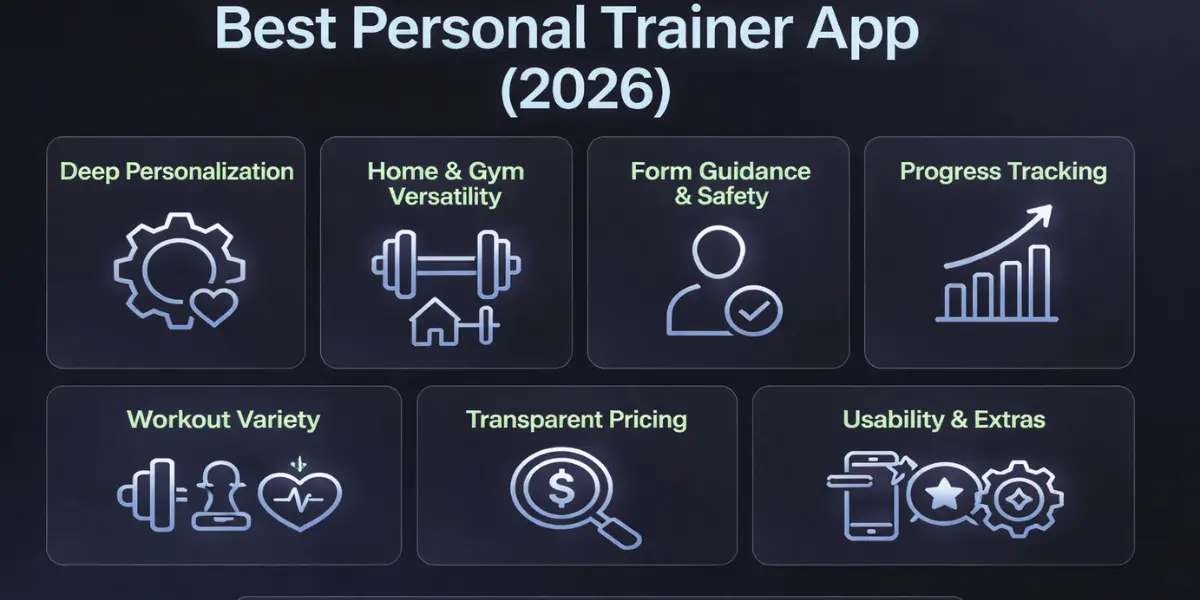
Choosing the right personal trainer app in 2026 means focusing on features that deliver real personalization and long-term adherence, not flashy marketing. Here are the seven non-negotiable elements every top app must nail.
- Deep Personalization — The best apps use AI (or real coaches) to factor in your goals, fitness level, injury history, available equipment, and daily recovery data. They adjust reps, sets, and exercises automatically instead of handing you a generic template.
- True Home/Gym Versatility — Look for massive exercise libraries with smart substitutions. The app should build a perfect workout whether you have only bodyweight, resistance bands, or a full commercial gym at your disposal.
- Form Guidance & Safety — High-quality video demos, slow-motion cues, and AI posture feedback (via camera on newer apps) prevent injuries and build confidence. This is especially crucial for home lifters without a spotter.
- Robust Progress Tracking — Automatic logging, performance graphs, PR alerts, and wearable sync let you see strength gains week over week. Data beats guesswork every time.
- Workout Variety — Strength, HIIT, mobility, yoga, cardio, and recovery sessions keep things fresh and prevent boredom or overuse injuries.
- Transparent Pricing & Value — Free trials, clear tiers, and measurable ROI matter. The top apps offer massive value compared to in-person rates while delivering results you can track.
- Intuitive Usability & Extras — Clean interface, offline mode, push notifications for accountability, and community or coach chat keep you coming back. Bonus points for Arabic language support or local weather integration for UAE users.
Red flags? Poor equipment adaptation, buggy interfaces, or zero human oversight in “AI-only” apps. Prioritize apps that score high on these seven pillars and you’ll avoid wasting months on tools that collect dust.
Top 6 Best Personal Trainer Apps for Home and Gym Workouts in 2026
After rigorous testing and cross-referencing the latest 2026 reviews, these six apps rise above the noise. Each excels in different scenarios while delivering measurable results for home, gym, or hybrid training.
Future – Best Overall for Human Coaching and Accountability
Future stands out as the gold standard for anyone craving real human connection without the in-person price tag. You get matched with a certified coach who builds custom plans around your exact goals, schedule, and equipment — then checks in daily via the app with adjustments, form feedback, and motivational messages.
In 2026, Future’s strength lies in its hybrid adaptability: your coach programs bodyweight circuits for home days or heavy barbell work for gym sessions, factoring in your Apple Watch data for recovery. Users love the accountability — missed workouts trigger gentle nudges, and weekly video calls keep you on track. It’s perfect for busy UAE professionals who need someone in their corner during Ramadan fasting or travel-heavy weeks.
Pros include unmatched personalization from real humans, seamless wearable integration, and proven results (many users hit PRs faster than solo training). Cons: premium pricing at $199/month (with first-month deals often dropping to $99 or less). Ideal for intermediates and advanced trainees who value coaching over pure automation. If consistency has been your biggest barrier, Future removes the excuses.
Fitbod – Best AI-Powered App for Smart Strength Training
Fitbod is the AI powerhouse that feels like having a strength coach who never sleeps. Its proprietary algorithm generates fresh workouts every session based on your logged performance, muscle recovery scores, available equipment, and goals — automatically applying progressive overload while avoiding overtraining.
Whether you’re at home with dumbbells or in a Dubai gym with machines and barbells, Fitbod swaps exercises intelligently and suggests optimal sets/reps. The recovery tracking is next-level: it analyzes soreness and previous volume to prioritize fresh muscle groups. In 2026 testing, users saw faster strength gains and better adherence because the app removes all planning friction.
Pros: incredibly accurate personalization, beautiful interface, detailed analytics, and affordable pricing ($15.99/month or $95.99/year). Cons: no live human coach (pure AI). Perfect for gym-focused lifters or home warriors chasing muscle and strength without decision fatigue. If data-driven training excites you, Fitbod is an unbeatable value.
Nike Training Club – Best Free App for Beginners and Variety
Nike Training Club (NTC) proves you don’t need to spend a dirham to get world-class guidance. This completely free app boasts thousands of guided workouts across strength, HIIT, yoga, mobility, and cardio — all filmed with pro trainers and broken into clear 15–45 minute sessions.
It adapts to home (bodyweight only) or gym (equipment options) and offers multi-week programs tailored to your level. In 2026, NTC added better progress tracking and wearable sync, making it far more than a basic video library. Beginners love the zero-intimidation entry point, while intermediates use it for active recovery or travel days.
Pros: 100% free, huge variety, excellent video quality, and Nike’s trusted brand. Cons: less deep personalization than paid AI or coaching apps. Ideal for anyone testing the waters or supplementing a primary program. For UAE residents wanting no-commitment flexibility, NTC is the perfect starting line.
Caliber – Best Value Hybrid for Science-Based Coaching
Caliber delivers evidence-based strength training with flexible tiers that scale from free solo workouts to full 1:1 premium coaching. The free version gives unlimited workout creation and tracking with 600+ exercises; the Plus tier ($6–12/month) unlocks coach-designed programs and nutrition targets; and Premium coaching (~$200/month) matches you with elite trainers for custom plans and weekly reviews.
Its science-backed approach shines in progressive overload and habit formation — users consistently report 20%+ body composition changes in 90 days. Home or gym? Caliber adapts seamlessly with video cues and substitutions.
Pros: robust free tier, strong results data, nutrition integration. Cons: premium coaching is pricey. Perfect for budget-conscious beginners who want to upgrade later or serious trainees seeking proven programming. Great middle ground for hybrid lifters in Fujairah or Dubai.
Shred – Best for Circuit Training and Home-Gym Versatility
Shred earns top marks for its AI-powered circuit-style workouts that blend strength, metabolic conditioning, and fun programming for both home and commercial gyms. The app customizes sessions around your equipment and time constraints while keeping energy high with varied formats.
In 2026 reviews, Shred scored highest for overall workout app enjoyment and results across hybrid users. Form videos and real-time adjustments prevent plateaus and boredom.
Pros: high-quality production, excellent variety, strong home-gym balance. Cons: slightly less focus on pure heavy strength compared to Fitbod. Ideal for those who love metabolic circuits or want engaging sessions that feel less like “work.”
Freeletics – Best for Pure Home Workouts and HIIT Intensity
Freeletics excels when you have zero equipment and want maximum intensity. Its AI coach creates bodyweight (or minimal-gear) HIIT and strength sessions that adapt to your feedback and performance. In 2026, the app added better recovery tools and program variety, making it a favorite for apartment dwellers or travel-heavy users.
Pros: highly motivating AI, scalable difficulty, no-gym focus. Cons: less ideal for heavy barbell lifters. Perfect for home-only trainees or as a supplement for cardio days.
Head-to-Head Comparison Table
| App | Monthly Price | AI vs Human | Home/Gym Versatility | Key Strength | Best For | Overall Rating (out of 5) |
| Future | $199 (discounts available) | Human Coaching | Excellent | Accountability & customization | Busy pros needing support | 4.9 |
| Fitbod | $15.99 or $95.99/year | Advanced AI | Outstanding | Recovery-based planning | Strength & muscle gains | 4.8 |
| Nike Training Club | Free | Guided Library | Excellent | Variety & accessibility | Beginners & free users | 4.7 |
| Caliber | Free to $200+ | Hybrid (AI + Coaching) | Excellent | Science-backed results | Value seekers & upgraders | 4.6 |
| Shred | Subscription (~$15–25) | AI Circuits | Outstanding | Fun metabolic training | Hybrid circuit lovers | 4.5 |
| Freeletics | Subscription (~$10–20) | AI HIIT | Home-Focused | Bodyweight intensity | No-equipment warriors | 4.4 |
This quick-scan table helps you match the right tool to your budget and style in seconds.
Home Workouts vs. Gym Workouts: Which Apps Excel Where?
Home workouts thrive with minimal space and equipment, while gym sessions unlock heavier loads and variety. The best apps bridge both worlds seamlessly.
For pure home training, Freeletics and Nike Training Club dominate with bodyweight-focused libraries and short, effective sessions you can do in a living room. Fitbod and Shred also shine here through smart substitutions — turn a barbell bench into dumbbell or resistance-band alternatives without losing effectiveness.
Gym-focused users love Fitbod’s recovery-aware heavy lifting plans and Future’s coach-driven progressive overload on machines and free weights. Caliber and Shred add metabolic finishers that maximize commercial gym tools.
Hybrid winners? Future, Fitbod, and Caliber let you toggle equipment mid-plan so one program serves both environments. Pro tip: always input your available gear during setup — the smartest apps use this data to generate perfect sessions every time.
How to Choose (and Start Using) the Right App for Your Goals
Selecting the perfect personal trainer app can feel overwhelming with so many strong options available in 2026. The good news? You don’t need to overthink it. Follow this clear, practical five-step process to find the app that matches your lifestyle, goals, and budget — and actually stick with it for long-term results.
- Define Your Primary Goal and Constraints Start by getting crystal clear on what you want to achieve. Are you focused on fat loss, building muscle, improving endurance, or simply getting fitter and healthier overall? Write down your available equipment (bodyweight only, dumbbells, full gym access) and realistic training schedule. This step is crucial because the best app for someone training at home in Fujairah will differ from someone who hits a fully equipped gym in Dubai five days a week.
- Evaluate Your Budget and Preferred Coaching Style Decide how much you’re willing to invest monthly and what type of guidance suits you best. If you’re just starting out or testing the waters, begin with free or low-cost options. Prefer full control and smart automation? Go for advanced AI apps. Need extra motivation and accountability? Choose one with human coaching. Understanding this early prevents you from paying for features you won’t use or choosing something too basic for your needs.
- Test Before You Commit Never download an app based on screenshots alone. Take advantage of free trials — most top apps offer 7 to 30 days of full access or limited workouts. Use this time to explore the interface, try a few workouts (home and gym styles), and check how well the app understands your equipment and goals. If it feels confusing or frustrating in the first week, it probably won’t get better later.
- Research Real User Experiences After testing, read recent 2026 reviews on the App Store and Google Play. Don’t just look at star ratings — focus on detailed feedback with before-and-after photos, consistency stories, and mentions of real results. Pay special attention to reviews from people with similar goals, schedules, and training environments as yours.
- Commit and Track Your Progress for the First 30 Days Once you choose an app, commit fully. Log every workout, note how you feel, and track measurable improvements (weight, measurements, strength, energy levels). If motivation drops or you’re not seeing results, make small adjustments — change the program, add variety, or even combine two apps. The first month is about building the habit, not perfection.
Taking Personalization Further: When (and Why) You Need a Custom Fitness App
Off-the-shelf apps deliver impressive results for most people, but serious athletes, personal trainers scaling their business, or gyms wanting branded experiences often need more. A custom fitness app lets you embed unique features like Arabic-language coaching, local prayer-time integration, UAE-specific nutrition tied to iftar timings, or white-label tools for client management.
This is where partnering with a leading fitness app development company in Dubai makes all the difference. They specialize in building tailored AI trainers, progress dashboards, and community features that generic apps simply can’t match. If you run a gym or coach online, exploring expert gym app development in Dubai opens doors to recurring revenue through subscription-based client portals.
For those wanting full ownership and scalability, top-tier fitness app development Dubai services deliver exactly what you envision — from computer-vision form correction to wearable integrations customized for desert heat recovery. Whether you’re an individual seeking ultimate personalization or a business ready to stand out, custom development future-proofs your fitness journey in ways stock apps never will. Ready for bespoke? Reach out to specialists who understand the UAE market inside out.
Why Professional IT Consulting Is Essential for Fitness Tech Success
Ready-made fitness apps are great for most people, but what if you want something truly custom — built exactly for your goals, your gym, or your coaching business?
That’s where professional IT consulting makes all the difference. Instead of jumping straight into development and risking costly mistakes, experienced IT consultants act as your smart guide. They help you choose the right technology, design a scalable and secure app, integrate wearables, payments, and AI features smoothly, and future-proof everything for 2026 and beyond.
In Dubai’s fast-moving market, top IT consulting teams ensure your app complies with local regulations, handles hundreds of users without crashing, and delivers beautiful analytics dashboards that actually drive results. Whether you’re a gym owner wanting your own branded platform or an individual craving next-level personalization, expert consulting saves you time, reduces risk, and dramatically increases your chances of success.
The smartest move? Pair a leading fitness app development company in Dubai with strong IT consulting. Together, they turn your idea into a powerful, high-performance fitness solution that stands out and lasts.
Conclusion
The best personal trainer app for home and gym workouts in 2026 comes down to your priorities: Future for human accountability, Fitbod for intelligent AI strength plans, or Nike Training Club if you want zero-cost entry. Whichever you choose, consistency with any of these tools will deliver the results traditional training promises but rarely sustains.
Your strongest self is literally one download away. Pick one from the list above, commit to 30 days, and watch your fitness transform. For those ready to go beyond generic solutions, custom development through a fitness app development company in Dubai can take your training (or coaching business) to the next level.
Ready to Build Your Own Fitness App in 2026?
The fitness industry is evolving fast — and generic apps are no longer enough. Whether you’re a gym owner, personal trainer, or startup founder, the right custom fitness app can turn your vision into a scalable digital business.
At SISGAIN, we specialize in building AI-powered fitness apps tailored to your exact needs — from workout tracking and wearable integrations to real-time coaching and monetization systems.
Take the next step today:
→ Explore our fitness app development services
→ Visit our Contact page
→ See how we build scalable, user-first apps
Request a free consultation and start building your fitness platform today.
FAQs
What is the best personal trainer app for home and gym workouts in 2026?
Future stands out as the overall winner for its human coaching and seamless hybrid adaptability, while Fitbod leads for AI-driven users.
Are free apps like Nike Training Club actually effective?
Yes — NTC delivers proven results through structured programs and excellent form guidance. Many users build strong habits before upgrading to paid options.
How do AI trainer apps like Fitbod compare to human coaches?
AI excels at data-driven personalization and recovery tracking at a fraction of the cost. Human coaches (Future/Caliber Premium) add emotional accountability and nuanced adjustments AI still can’t fully replicate.
Which apps work best without any gym equipment?
Freeletics and Nike Training Club dominate pure bodyweight training, with Shred and Fitbod offering excellent substitutions for minimal-gear setups.
Do these apps integrate with Apple Watch or Fitbit?
Yes — Future, Fitbod, Caliber, and Shred all sync seamlessly for heart rate, calories, and recovery insights.