
Imagine a business that understands what a customer needs even before they ask. In today’s fast-moving digital world, customers expect brands to recognize their preferences, respond instantly, and deliver experiences that feel personal and relevant. This shift in expectations is pushing organizations to rethink how they manage customer relationships and interactions.
This is where AI-powered hyper-personalization CRM systems are making a powerful impact. These advanced platforms go far beyond traditional customer databases. They analyze large volumes of data, learn from customer behavior, and help businesses create meaningful and highly personalized experiences at every stage of the customer journey.
Modern companies are increasingly adopting AI-powered CRMs to better understand their audiences and build stronger relationships. Instead of relying on guesswork, these intelligent systems use data-driven insights to recommend the right actions, predict customer needs, and enable more effective communication.
As competition continues to grow across industries, businesses that embrace intelligent CRM technology are better positioned to improve customer engagement, increase loyalty, and drive long-term growth.
In this blog, we’ll explore how these next-generation CRM systems are transforming customer relationship management and why they are becoming essential for forward-thinking organizations.
Understanding AI-Powered Hyper-Personalization in CRM

Hyper-personalization is the evolution of traditional personalization strategies. While standard CRM systems rely on basic customer data such as demographics or purchase history, AI-powered systems analyze vast amounts of behavioral, contextual, and real-time data to deliver deeply personalized interactions.
An AI-powered CRM uses machine learning algorithms, predictive analytics, and intelligent automation to understand customer preferences, anticipate needs, and recommend the most relevant actions. These insights help businesses provide the right message, offer, or service at the perfect moment.
For example, when integrated with marketing platforms, AI CRM integrations can automatically analyze customer browsing patterns, engagement levels, and past transactions. The system then recommends personalized campaigns, product suggestions, and targeted communications.
Organizations seeking advanced implementations often collaborate with an IT consulting company in Dubai that specializes in software consultancy in Dubai to design customized CRM solutions aligned with business objectives.
Hyper-personalization powered by AI allows businesses to move beyond reactive customer service and adopt proactive engagement strategies that significantly improve user experience and retention.
The Evolution of CRM Systems
Customer relationship management platforms have evolved dramatically over the past two decades. Early CRM systems primarily focused on storing customer data and managing contact information. These platforms offered limited automation and required manual data analysis to extract insights.
As businesses expanded their digital presence, CRM platforms began integrating with marketing automation tools, sales management platforms, and customer support software. However, these systems still lacked the intelligence needed to provide meaningful predictive insights.
The integration of artificial intelligence introduced a major transformation. Today’s AI-powered CRMs can analyze massive datasets, predict customer behavior, and automate decision-making processes.
With the help of custom AI development solutions, modern CRM systems can now perform tasks such as:
- Predicting customer churn
- Recommending personalized products
- Automating lead scoring
- Optimizing sales strategies
- Enhancing customer support interactions
Many organizations now rely on IT consultant services and IT consultation providers to modernize their legacy CRM infrastructure and implement intelligent AI-driven capabilities.
Why Businesses Need AI-Powered Hyper-Personalization
Customer expectations have dramatically changed in the digital age. Consumers interact with brands through multiple platforms including websites, mobile apps, social media, and messaging services. Because of this constant connectivity, they expect consistent, relevant, and personalized experiences wherever they engage with a brand.
Traditional CRM platforms often struggle to handle the complexity and volume of modern customer data. They typically store information but lack the intelligence required to analyze behavior patterns and predict customer needs. This is why many organizations are now adopting AI-powered CRMs to gain deeper insights into customer interactions and preferences.
Hyper-personalization allows businesses to communicate with customers in a more meaningful way. Instead of sending generic messages, companies can tailor their communication based on individual behavior, interests, and previous interactions. This approach naturally improves customer engagement because people are more likely to respond to content that feels relevant to them.
Another major advantage is the ability to recommend products or services that match a customer’s interests. When businesses use intelligent systems to analyze purchasing behavior and browsing activity, they can present highly relevant suggestions that increase the chances of conversion. At the same time, faster and smarter responses help improve customer satisfaction, as customers feel understood and valued by the brand.
Over time, these personalized interactions help businesses build stronger relationships with their customers. By anticipating needs and responding proactively, organizations can create long-term loyalty and trust.
Companies that invest in advanced CRM technologies often partner with experienced providers offering IT consulting for businesses and IT consultancy services in Dubai to ensure smooth implementation and optimal system performance. In addition, reliable IT services and support play a crucial role in maintaining and continuously optimizing AI-driven CRM systems as business needs evolve.
The Role of AI in Modern CRM Systems
Artificial intelligence acts as the core engine behind hyper-personalization in modern CRM platforms. By analyzing large volumes of customer data, AI can identify patterns, trends, and behavioral insights that would be extremely difficult to detect through manual analysis. This ability allows businesses to better understand customer preferences and deliver more relevant interactions throughout the customer journey.
Modern AI-Driven Systems rely on a combination of advanced technologies that work together to enhance CRM capabilities. Machine learning algorithms continuously learn from historical data and customer interactions, helping businesses improve predictions and decision-making over time. At the same time, natural language processing enables CRM platforms to understand and interpret customer conversations from emails, chatbots, and messaging platforms.
Predictive analytics is another important component, as it helps businesses anticipate customer actions, purchasing behavior, and potential churn. In addition, automation tools allow CRM systems to trigger personalized responses based on specific events or customer activities, ensuring that communication remains timely and relevant.
Through effective AI CRM integrations, organizations can connect their CRM platforms with marketing automation tools, customer support systems, analytics platforms, and various third-party applications. This interconnected ecosystem creates a unified view of customer data, allowing businesses to deliver consistent and personalized experiences across multiple channels.
To ensure successful implementation, many organizations seek guidance from experts in software consultancy in Dubai, who help design and integrate AI technologies into CRM platforms in a seamless and scalable way.
Agentic AI in CRM: The Next Big Innovation
One of the most exciting AI trends shaping the future of CRM technology is the emergence of Agentic AI in CRM. This new approach is transforming how businesses manage customer relationships by introducing intelligent systems that can take action on their own.
Agentic AI refers to autonomous AI systems that can make decisions and perform tasks independently based on specific goals or instructions. Unlike traditional AI tools that only provide suggestions or insights, these intelligent systems can actually execute actions within CRM workflows. This means businesses can automate many routine tasks while still maintaining accurate and personalized customer interactions.
In practical terms, AI-powered agents can help CRM systems respond to customer inquiries automatically, ensuring that customers receive quick and relevant replies. They can also analyze incoming leads and assign them to the most suitable sales representatives, improving response times and increasing the chances of successful conversions. In marketing, these systems can generate personalized campaigns based on customer behavior and engagement patterns. At the same time, they can streamline customer support processes by identifying issues and routing them to the right teams.
Today, many AI agents in tech companies are already handling complex tasks that previously required manual work. By automating these responsibilities, businesses can save time, reduce operational costs, and allow employees to focus on more strategic activities.
When implemented effectively, Agentic AI can significantly improve productivity and operational efficiency. Organizations that collaborate with an IT consulting company in Dubai can take advantage of production-ready AI solutions to deploy intelligent CRM agents that integrate smoothly with their existing systems and business processes.
Key Components of AI-Powered Hyper-Personalization CRM Systems
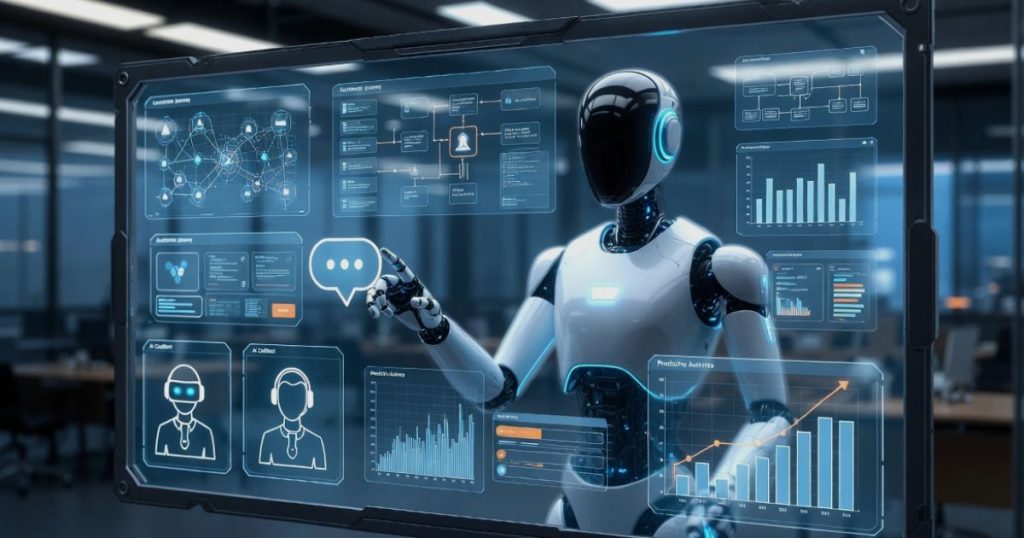
An effective AI-powered CRM system combines several advanced technologies that work together to deliver highly personalized customer experiences. These components help businesses collect meaningful data, analyze customer behavior, and respond intelligently at the right time.
Below are some of the key components that make hyper-personalized CRM systems powerful and efficient:
1. Advanced Data Collection
Data is the foundation of any AI-driven CRM system. These platforms gather information from multiple sources such as customer interactions, purchase history, website visits, social media activity, mobile app usage, and customer support conversations. By collecting data from different touchpoints, businesses can build a complete view of each customer.
2. AI-Powered Analytics
Once data is collected, AI analytics engines process it to uncover valuable insights. Machine learning models analyze customer behavior patterns, preferences, and engagement levels. Over time, these models continuously learn and improve their predictions, helping businesses make smarter decisions.
3. Predictive Intelligence
Predictive capabilities allow CRM systems to anticipate customer actions before they happen. For example, AI can identify customers who are likely to make a purchase, those who may stop using a service, or users who might respond well to a specific promotion. This allows businesses to take proactive steps to improve engagement.
4. Intelligent Automation
Automation tools help businesses respond instantly to customer behavior. For instance, if a customer abandons a shopping cart, the CRM system can automatically send a personalized email with product reminders, recommendations, or special discounts. This kind of automated response increases the chances of conversion.
5. Seamless AI CRM Integrations
Advanced AI CRM integrations ensure that customer data flows smoothly across marketing, sales, and customer service platforms. This connected ecosystem enables teams to access real-time information and deliver consistent experiences across all communication channels.
6. Custom CRM Development Capabilities
Every business has unique processes and customer engagement strategies. This is why many organizations invest in custom CRM development services to design CRM systems that match their industry requirements, operational workflows, and long-term business goals.
Together, these components create a powerful CRM environment that enables businesses to deliver smarter, faster, and more personalized customer experiences.
Benefits of AI-Powered CRM Systems for Businesses
The adoption of AI-powered CRM systems provides several strategic advantages for modern businesses. By combining artificial intelligence with customer data and automation, these platforms help organizations understand customers better, improve engagement, and make smarter business decisions. Below are some key benefits that businesses can experience when implementing AI-powered CRM solutions.
- Better Customer Understanding
AI-powered CRM systems analyze customer interactions across multiple channels such as websites, emails, social media, and support platforms. This allows businesses to gain deeper insights into customer preferences, behaviors, and purchasing patterns, helping them create more meaningful and personalized experiences. - More Effective Marketing Campaigns
AI-driven CRM platforms help marketing teams identify the most promising leads and audience segments. By analyzing customer data and engagement history, businesses can design personalized campaigns that are more relevant to customers, which ultimately increases engagement and improves conversion rates. - Improved Sales Performance
Sales teams can benefit greatly from AI-powered insights. CRM systems can automatically identify high-value prospects, prioritize leads, and provide recommendations that help sales representatives focus on the most profitable opportunities. This leads to faster deal closures and improved sales productivity. - Faster and Smarter Customer Support
Customer service departments can use intelligent chatbots and automated support tools to handle routine inquiries and resolve issues quickly. These systems help reduce response time while ensuring customers receive accurate and helpful assistance whenever they need it. - Higher Productivity and Business Growth
When businesses implement advanced CRM technologies with the support of IT consulting for businesses and experienced IT consultant services, they often see significant improvements in operational efficiency. Automation reduces manual work, teams become more productive, and organizations can focus on strategies that drive long-term growth and revenue.
By leveraging these benefits, businesses can build stronger customer relationships while improving overall performance and competitiveness in the market.
AI CRM Integrations and Intelligent Business Ecosystems
The true power of AI-powered CRM systems lies in their ability to integrate with other enterprise platforms.
AI CRM integrations connect CRM platforms with tools such as marketing automation software, analytics dashboards, enterprise resource planning systems, and customer support platforms.
This integration enables businesses to build a fully connected digital ecosystem where data flows seamlessly between systems.
For instance, when a marketing campaign generates new leads, the CRM system automatically assigns them to the appropriate sales representatives. AI algorithms then analyze customer interactions and recommend personalized engagement strategies.
Organizations that partner with an IT consulting company in Dubai often gain access to advanced integration expertise that ensures smooth system connectivity and optimal performance.
Production-Ready AI for CRM Systems
While experimental AI technologies generate excitement, businesses require production-ready AI solutions that deliver reliable results in real-world environments.
Production-ready AI systems are designed with scalability, security, and performance in mind. These systems undergo extensive testing and optimization to ensure they can handle large datasets and complex workflows.
Companies offering custom AI development solutions specialize in building AI models that can be integrated directly into enterprise CRM systems.
When combined with strong IT services and support, production-ready AI enables businesses to deploy intelligent CRM platforms that operate efficiently at scale.
AI Trends Shaping the Future of CRM
Artificial intelligence continues to evolve rapidly, and several emerging innovations are expected to reshape CRM systems in the coming years. These advancements are helping businesses create smarter, faster, and more personalized customer experiences. Below are some key AI trends that are influencing the future of CRM technology.
- Conversational AI for Smarter Customer Interaction
Conversational AI is becoming an important part of modern CRM platforms. With the help of intelligent chatbots and virtual assistants, businesses can communicate with customers through natural, human-like conversations. These systems can answer questions, provide product information, and guide customers through different stages of their journey, making interactions faster and more convenient. - Advanced Predictive Analytics
Predictive analytics is continuously improving as machine learning models analyze larger and more complex datasets. Future CRM systems will be able to predict customer needs, purchasing behavior, and potential churn with greater accuracy. This allows businesses to take proactive actions, such as offering personalized promotions or addressing issues before customers lose interest. - Growing Use of AI Agents in Business Operations
Another major trend is the increasing use of AI agents in tech companies. These intelligent systems can automatically manage customer interactions, run marketing campaigns, and support sales processes with minimal human involvement. By automating routine tasks, businesses can improve efficiency and allow employees to focus on strategic decision-making. - Smarter Automation and Decision-Making
AI-driven automation is expected to become more advanced in future CRM systems. Intelligent platforms will not only analyze data but also recommend or execute actions that improve customer engagement and business performance.
Organizations that stay ahead of these innovations by adopting AI-powered CRMs and working with experienced IT consultation providers will be better positioned to build stronger customer relationships and maintain a competitive advantage in the evolving digital marketplace.
The Growing Role of IT Consulting in AI CRM Adoption
Implementing AI-powered CRM systems requires technical expertise, strategic planning, and seamless integration with existing infrastructure.
This is why businesses increasingly rely on professional IT consulting and service providers to guide them through the process.
An experienced IT consulting company in Dubai can help organizations assess their technology landscape, identify opportunities for AI adoption, and develop customized implementation strategies.
Through specialized IT consultancy services in Dubai, businesses can ensure that CRM systems are designed to meet both current and future operational needs.
Additionally, IT support Dubai teams provide ongoing maintenance, troubleshooting, and performance optimization to ensure long-term system success.
Implementing Custom CRM Development for AI Personalization
Not all businesses have the same CRM requirements. Off-the-shelf CRM platforms may lack the flexibility needed to implement advanced AI-driven personalization features.
This is where custom CRM development services become essential.
Custom development allows organizations to build CRM systems tailored to their unique workflows, customer engagement strategies, and industry requirements.
For example, an e-commerce company may require advanced product recommendation engines, while a financial services firm may focus on predictive risk analysis and client engagement.
By working with providers offering custom AI development solutions, businesses can design intelligent CRM systems that deliver highly personalized experiences and measurable business value.
Challenges in Implementing AI-Powered CRM Systems
While AI-powered CRM systems offer many advantages, implementing them is not always simple. Businesses often face several practical challenges when adopting advanced AI technologies within their CRM platforms. Understanding these challenges helps organizations plan better and ensure a smoother implementation process.
- Maintaining High-Quality Data
One of the biggest challenges is data quality. AI systems depend on accurate, organized, and consistent data to generate meaningful insights. If the data stored in the CRM system is incomplete, outdated, or inconsistent, the AI models may produce inaccurate predictions. Businesses must ensure proper data management practices, including regular data cleaning and updates. - Integrating with Existing Systems
Many organizations already use multiple software platforms for sales, marketing, customer support, and operations. Integrating modern AI tools with these existing or legacy systems can sometimes be complex. Without proper integration, data may remain scattered across platforms, which reduces the effectiveness of AI-powered insights. - Addressing Security and Privacy Concerns
Customer data is highly sensitive, and protecting it is extremely important. When businesses implement AI-driven CRM systems, they must ensure strong security measures to protect customer information from data breaches or unauthorized access. Compliance with data privacy regulations is also essential. - Managing Technical Complexity
AI-based systems often require specialized technical knowledge for development, integration, and maintenance. Without the right expertise, businesses may struggle to fully utilize the capabilities of their CRM platforms.
To overcome these challenges, many organizations rely on experienced IT consulting for business providers. These experts help design secure, scalable, and well-integrated CRM architectures that ensure smooth implementation and long-term system performance.
Future Outlook: The Rise of Intelligent Customer Experience Platforms

The future of CRM technology is moving toward intelligent customer experience platforms that combine advanced technologies such as artificial intelligence, automation, analytics, and real-time engagement tools. These modern platforms are designed to help businesses understand their customers better and deliver more personalized interactions across every stage of the customer journey.
As technology continues to evolve, CRM systems will become more intelligent and capable of managing complex customer interactions with greater efficiency. One of the most exciting developments in this space is Agentic AI in CRM, which allows systems to act as autonomous assistants that can analyze data, make decisions, and execute tasks with minimal human involvement.
Businesses that begin adopting these intelligent technologies today will be better prepared for the future. By investing in advanced CRM innovation, organizations can create more connected customer experiences, improve operational efficiency, and build stronger, long-lasting relationships with their customers in an increasingly digital marketplace.
Final Thoughts
AI-powered hyper-personalization CRM systems are revolutionizing how businesses interact with customers. By combining artificial intelligence, predictive analytics, and automation, these systems enable organizations to deliver highly personalized experiences at scale.
This is where AI-powered hyper-personalization CRM systems are making a real difference. By combining intelligent data analysis, automation, and predictive insights, these advanced CRM platforms help organizations understand their customers better and interact with them in more relevant and impactful ways.
As technology continues to evolve, businesses that adopt intelligent CRM solutions will be better prepared to adapt to changing customer expectations and market demands. Investing in modern CRM innovation not only improves customer engagement but also helps companies create stronger relationships, drive sustainable growth, and stay competitive in an increasingly digital world.
FAQ’s
How do AI-powered CRM systems improve customer engagement?
AI-powered CRM systems improve customer engagement by understanding what customers are interested in and delivering content or offers that match their preferences. Instead of sending generic messages, businesses can communicate with customers in a more personalized way, which increases interaction, builds trust, and strengthens long-term relationships.
What is hyper-personalization in CRM?
Hyper-personalization in CRM refers to using advanced data analysis and artificial intelligence to create extremely personalized customer experiences. It goes beyond basic personalization by analyzing real-time data, customer behavior, and past interactions to deliver highly relevant recommendations, messages, and services tailored to each individual customer.
What are the main benefits of using AI-driven CRM systems?
AI-driven CRM systems help businesses better understand their customers, improve marketing campaigns, increase sales conversions, and enhance customer support. They also automate repetitive tasks, which saves time for employees and allows teams to focus on strategic activities that drive business growth.
What challenges can businesses face when implementing AI-powered CRM systems?
Businesses may face several challenges during implementation, such as maintaining high-quality data, integrating AI tools with existing systems, and ensuring strong data security. These challenges require proper planning, technical expertise, and reliable technology infrastructure to ensure the system works efficiently.
How does AI help sales and marketing teams in CRM systems?
AI helps sales and marketing teams by identifying potential customers, predicting buying behavior, and recommending the best strategies to engage them. It can analyze customer interactions and automatically suggest personalized campaigns, helping businesses target the right audience and improve conversion rates.