

AI trends have moved beyond experimentation and entered a phase of strategic maturity. Organizations worldwide are witnessing transformative AI advancements that are redefining how businesses operate, compete, and deliver value. What was once considered a support technology is now embedded at the core of enterprise strategy.
The latest developments in artificial intelligence are accelerating digital transformation across sectors. From predictive analytics and automation to autonomous systems and intelligent personalization, AI is influencing operational models, customer engagement strategies, and innovation pipelines. These evolving AI industry trends are not temporary shifts; they represent structural changes in the global economy.
Businesses that understand emerging AI trends—what they are and why they matter—are better positioned to lead in an increasingly data-driven marketplace. This comprehensive guide explores the 20 most impactful AI trends reshaping global industries, explaining each trend, its strategic relevance, and real-world business applications.
Generative AI
Generative AI is an advanced branch of artificial intelligence that creates original content such as text, images, code, audio, and simulations. Instead of simply analyzing existing information, it learns patterns from vast datasets and produces new, human-like outputs. Powered by deep learning models, generative AI systems can draft documents, design visuals, generate software code, and simulate complex scenarios with remarkable accuracy and contextual understanding.
Why It Matters
As one of the most transformative AI trends, generative AI is reshaping how organizations innovate and scale. It reduces content production time, accelerates product development cycles, and enhances creativity across departments. Companies are integrating it into marketing, research, and software development workflows.
Example in Real Business Use
A global retail brand uses generative AI to automatically create personalized marketing campaigns tailored to different customer segments. The system analyzes purchasing behavior and browsing patterns, then generates targeted product descriptions, promotional emails, and digital advertisements. This approach increases engagement rates, improves conversion performance, and significantly reduces the time required to launch campaigns. Similarly, technology companies apply generative AI in software development to generate and optimize code, accelerating innovation and supporting faster mobile app development initiatives.
Agentic AI and Autonomous Systems
Agentic AI refers to intelligent systems that can independently make decisions, plan actions, and execute tasks with minimal human intervention. Unlike traditional AI models that require direct instructions for each step, agentic systems operate with defined objectives and adapt dynamically to changing environments. Powered by advanced machine learning, reinforcement learning, and real-time data processing, these autonomous systems can analyze complex scenarios, optimize workflows, and continuously improve performance through feedback loops.
Why It Matters
As one of the most strategic AI trends shaping global industries, agentic AI enhances operational efficiency and decision-making speed. It reduces human dependency in repetitive and high-volume processes while improving accuracy and scalability. Organizations adopting this AI new technology are able to streamline logistics, automate resource allocation, strengthen cybersecurity monitoring, and enable intelligent automation at scale. This shift reflects broader AI industry trends where autonomy and real-time optimization are becoming competitive differentiators.
Example in Real Business Use
A logistics enterprise deploys autonomous AI agents to manage delivery operations. The system continuously analyzes traffic data, fuel consumption patterns, and shipment priorities to dynamically optimize routes. As conditions change, the AI adjusts decisions instantly without manual input, reducing operational costs and delivery delays. In manufacturing, autonomous systems monitor equipment performance and automatically schedule maintenance before failures occur, preventing downtime and improving overall productivity.
Multimodal AI
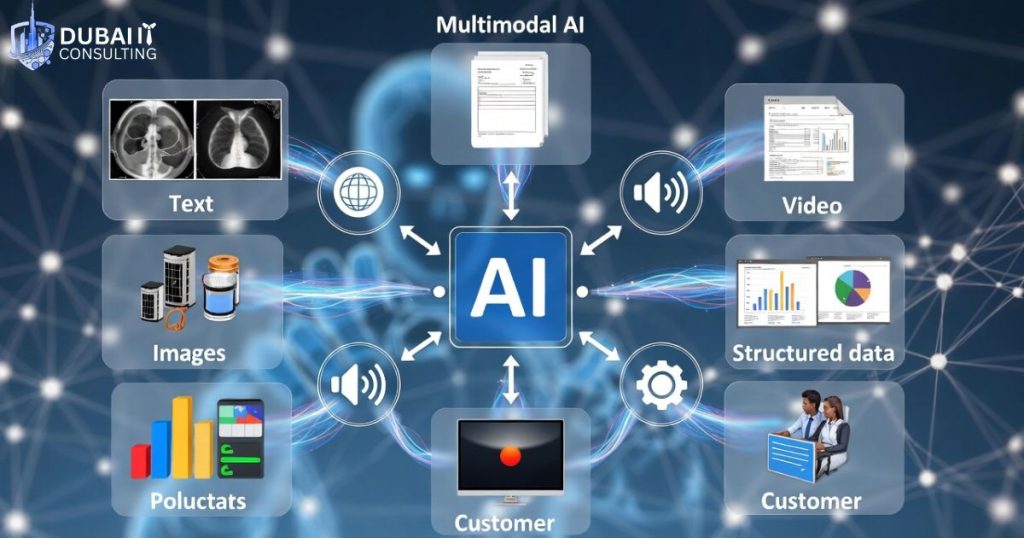
Multimodal AI is an advanced form of artificial intelligence that can process, interpret, and connect multiple types of data simultaneously, including text, images, audio, video, and structured data. Rather than analyzing each input in isolation, it integrates diverse data streams to generate more accurate and context-aware insights. Powered by deep learning architectures, multimodal AI systems can understand relationships between visual, textual, and numerical information, enabling richer analysis and more intelligent outputs.
Why It Matters
As one of the fastest-growing AI trends within evolving AI industry trends, multimodal AI enhances precision and contextual intelligence across enterprise environments. It reduces fragmented decision-making by combining data sources into a unified analytical framework. Organizations adopting this AI new technology gain deeper insights, improve automation accuracy, and strengthen strategic planning capabilities across functions such as healthcare, finance, retail, and manufacturing.
Example in Real Business Use
A healthcare organization leverages multimodal AI to combine radiology images, electronic health records, and laboratory reports into a single analytical model. By correlating imaging data with patient history and diagnostic results, the system supports faster and more accurate clinical decisions. In retail, companies integrate customer reviews, purchase history, and visual product data to improve personalization strategies and deliver highly targeted recommendations across digital platforms.
AI-Powered Predictive Analytics
AI-powered predictive analytics is an advanced application of artificial intelligence that analyzes historical and real-time data to forecast future outcomes. By leveraging machine learning algorithms, statistical modeling, and pattern recognition, these systems identify trends, detect anomalies, and generate forward-looking insights. Unlike traditional reporting tools that focus on past performance, predictive analytics enables organizations to anticipate risks, customer behavior, and market shifts with greater precision.
Why It Matters
As one of the most impactful AI trends shaping modern enterprises, predictive analytics strengthens strategic decision-making and risk management. It allows businesses to move from reactive operations to proactive planning. By anticipating demand fluctuations, operational bottlenecks, and customer preferences, organizations can allocate resources more effectively, reduce uncertainty, and improve profitability. This capability plays a critical role in digital transformation strategies across industries.
Enterprise Use Case
A financial services company uses AI-powered predictive analytics to assess credit risk by analyzing customer transaction history, repayment behavior, and external economic indicators. The system forecasts the likelihood of default, enabling faster and more accurate lending decisions. In retail, companies apply predictive models to anticipate product demand, optimize inventory levels, and reduce stock shortages or overstock situations, improving both customer satisfaction and operational efficiency.
Explainable and Ethical AI
Explainable and Ethical AI refers to artificial intelligence systems designed to operate transparently, fairly, and responsibly. Explainable AI focuses on making model decisions understandable to humans by clarifying how conclusions are reached. Ethical AI ensures that systems are developed and deployed without bias, discrimination, or harmful consequences. These frameworks integrate governance policies, bias detection mechanisms, accountability standards, and compliance measures to align AI systems with legal and societal expectations.
Why It Matters
As AI becomes deeply embedded in business and public systems, trust and accountability are critical. Among the most important AI trends, explainability and ethics address concerns around transparency, regulatory compliance, and responsible innovation. Organizations that prioritize ethical AI reduce reputational risk, improve stakeholder confidence, and ensure long-term sustainability. In highly regulated industries, transparency in AI decision-making is not optional; it is a strategic necessity.
Enterprise Use Case
A financial institution deploys explainable AI models for loan approval processes. Instead of delivering a simple approval or rejection, the system provides clear reasoning based on income stability, credit history, and repayment behavior. This transparency strengthens regulatory compliance and builds customer trust.
Intelligent Automation and Hyper automation
Intelligent automation and hyperautomation combine artificial intelligence, machine learning, robotic process automation (RPA), and advanced analytics to automate complex business processes end to end. Unlike basic automation that handles repetitive tasks, intelligent automation integrates decision-making capabilities, enabling systems to analyze data, adapt to changing inputs, and execute workflows with minimal human intervention. Hyperautomation extends this approach across entire organizational ecosystems, connecting multiple systems, tools, and departments into a unified automated framework.
Why It Matters
As one of the most impactful AI trends transforming enterprise operations, intelligent automation enhances efficiency, accuracy, and scalability. It reduces operational costs, minimizes human error, and accelerates process execution across finance, supply chain, customer service, and IT functions. Organizations leveraging this AI new technology gain the ability to streamline workflows, improve compliance monitoring, and respond faster to market demands, aligning with broader AI industry trends focused on operational excellence.
Enterprise Use Case
A global banking institution implements intelligent automation to manage loan processing workflows. The system automatically verifies documents, extracts relevant data, performs risk assessments, and routes applications for approval without manual intervention. This reduces processing time, improves accuracy, and enhances customer satisfaction. In manufacturing, hyperautomation connects production planning, inventory management, and quality control systems, enabling real-time optimization and improved operational performance.
AI in Cybersecurity
AI in Cybersecurity is an advanced application of artificial intelligence that strengthens digital defenses by detecting, preventing, and responding to cyber threats in real time. Instead of relying solely on predefined rules and signatures, it uses machine learning and deep learning models to analyze vast amounts of data, identify anomalies, predict emerging attacks, and automate responses with high speed and precision.
Why It Matters
As cyber threats grow more sophisticated, frequent, and AI-powered themselves (such as advanced phishing or adaptive malware), AI in cybersecurity has become essential for organizations to stay ahead. It dramatically reduces detection and response times—from days or weeks to minutes—minimizes human error, scales protection across massive networks, and lowers the burden on security teams facing alert fatigue. Enterprises are integrating it into security operations centers (SOCs), endpoint protection, network monitoring, and compliance workflows to safeguard sensitive data, maintain business continuity, and reduce breach-related costs.
Enterprise Use Case
A global financial institution deploys AI-powered cybersecurity systems to monitor millions of transactions in real time. The system detects unusual spending patterns and flags potential fraud instantly, enabling immediate intervention. In enterprise IT environments, AI-driven security platforms automatically identify abnormal network behavior, isolate compromised devices, and initiate corrective actions, significantly reducing response time and minimizing potential damage.
Edge AI
Edge AI refers to artificial intelligence systems that process and analyze data directly on local devices such as sensors, smartphones, cameras, or industrial machines, rather than sending all data to centralized cloud servers. By running AI models at the edge of the network, these systems enable faster computation and localized decision-making.
Why It Matters
As one of the most practical AI trends emerging across industries, Edge AI reduces latency, lowers bandwidth usage, and enhances real-time responsiveness. This AI new technology is particularly valuable in environments where instant decisions are critical, such as manufacturing, healthcare, retail, and autonomous systems. It also improves data privacy by minimizing the need to transmit sensitive information to external servers.
Business Example
In modern manufacturing plants, Edge AI systems are embedded in production equipment to analyze performance data such as temperature and vibration in real time. When irregular patterns are detected, the system instantly triggers maintenance alerts, preventing unexpected downtime and reducing operational losses.
AI in Mobile App Development
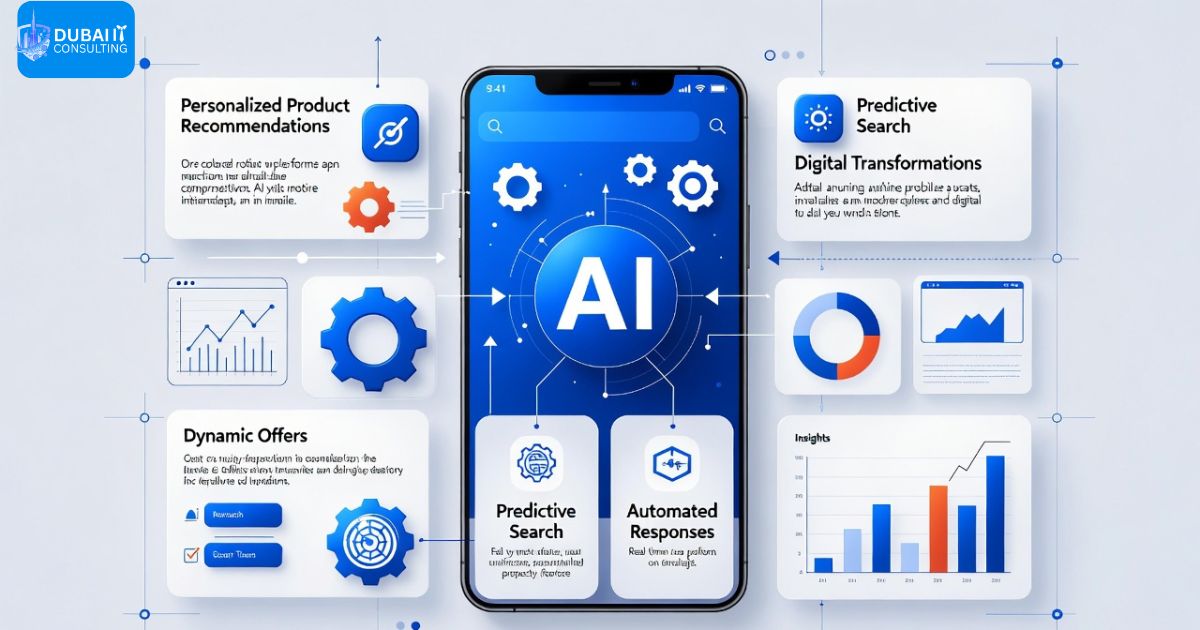
AI in mobile app development refers to the integration of artificial intelligence capabilities within applications to enhance functionality, personalization, automation, and security. By embedding machine learning models, natural language processing, and predictive analytics into mobile platforms, businesses can create applications that adapt to user behavior, automate responses, and deliver intelligent insights in real time.
Why It Matters
As one of the most influential AI trends in digital transformation, AI-powered mobile applications provide highly personalized and responsive user experiences. They analyze user interactions, anticipate preferences, strengthen security through biometric authentication, and improve engagement through predictive features. This integration allows businesses to move beyond static app functionality and offer dynamic, data-driven services.
Real-World Application
An e-commerce platform integrates AI within its mobile app development strategy to analyze browsing patterns and purchase history. The application then delivers personalized product suggestions, dynamic offers, and predictive search results, driving higher conversion rates and creating a seamless customer experience.
Conversational AI and AI Chat Bot Systems
Conversational AI refers to artificial intelligence technologies that enable human-like interaction through text and voice interfaces. These systems use natural language processing, machine learning, and contextual understanding to interpret user intent and deliver relevant responses. Modern AI chat bot systems go beyond scripted replies by learning from interactions, understanding conversation flow, and providing personalized assistance across digital platforms.
Why It Matters
As one of the most visible and widely adopted AI trends, conversational AI is transforming customer engagement and support operations. Businesses can provide 24/7 assistance, reduce operational costs, and improve response accuracy. AI chat bot solutions enhance user experience by delivering instant responses, resolving common queries automatically, and seamlessly transferring complex issues to human agents when necessary.
Real-World Application
A telecommunications provider implements AI chatbot systems across its website and mobile app to manage high volumes of customer inquiries. The system handles billing questions, service upgrades, and troubleshooting requests in real time, significantly reducing response time while improving customer satisfaction and operational efficiency.
AI Democratization
AI democratization refers to the widespread accessibility of artificial intelligence tools and technologies across all levels of an organization, not just technical teams. Through low-code and no-code platforms, cloud-based AI services, and user-friendly interfaces, businesses can empower non-technical professionals to build, deploy, and manage AI solutions without deep programming expertise.
Why It Matters
As AI new technology continues to evolve, democratization accelerates enterprise-wide innovation and adoption. It reduces reliance on specialized data science teams, shortens implementation timelines, and encourages data-driven decision-making across departments. This shift enables organizations to scale AI initiatives more efficiently and competitively.
Real-World Application
Marketing teams leverage AI-powered platforms to analyze campaign performance, segment customer audiences, and generate predictive insights independently, allowing faster strategic adjustments without direct involvement from data scientists.
Digital Twins with AI
Digital twins with AI refer to virtual replicas of physical assets, systems, or processes that use artificial intelligence and real-time data to simulate performance. These intelligent models continuously learn from sensor inputs and operational data, allowing organizations to monitor, analyze, and predict how physical systems behave under different conditions.
Why It Matters
As one of the emerging AI trends transforming industrial strategy, AI-powered digital twins enable proactive decision-making. Organizations can test scenarios, identify potential failures, optimize operations, and reduce risk without disrupting real-world systems. This leads to improved efficiency, cost savings, and stronger operational resilience.
Business Example
An energy company deploys AI-powered digital twins to simulate power grid performance under varying demand and weather conditions. By modeling different scenarios, the company can anticipate disruptions, optimize energy distribution, and improve infrastructure reliability.
AI in Financial Services
Financial services leverage artificial intelligence to enhance fraud detection, credit scoring, algorithmic trading, risk modeling, and customer analytics. By analyzing large volumes of transactional and behavioral data, AI systems can identify anomalies, predict creditworthiness, and support faster, more accurate decision-making in real time.
Why It Matters
Among the most significant recent developments in artificial intelligence, AI adoption in finance strengthens risk management, improves regulatory compliance, and enhances operational efficiency. Financial institutions can detect fraudulent activity faster, assess credit risk more accurately, and respond proactively to market fluctuations, building greater resilience in a dynamic economic environment.
Real-World Application
A bank integrates AI-based fraud monitoring into its transaction systems to detect suspicious spending patterns instantly. When irregular activity is identified, the system triggers alerts and temporarily restricts transactions, reducing financial losses and protecting customer accounts.
AI Consulting and Strategic Integration
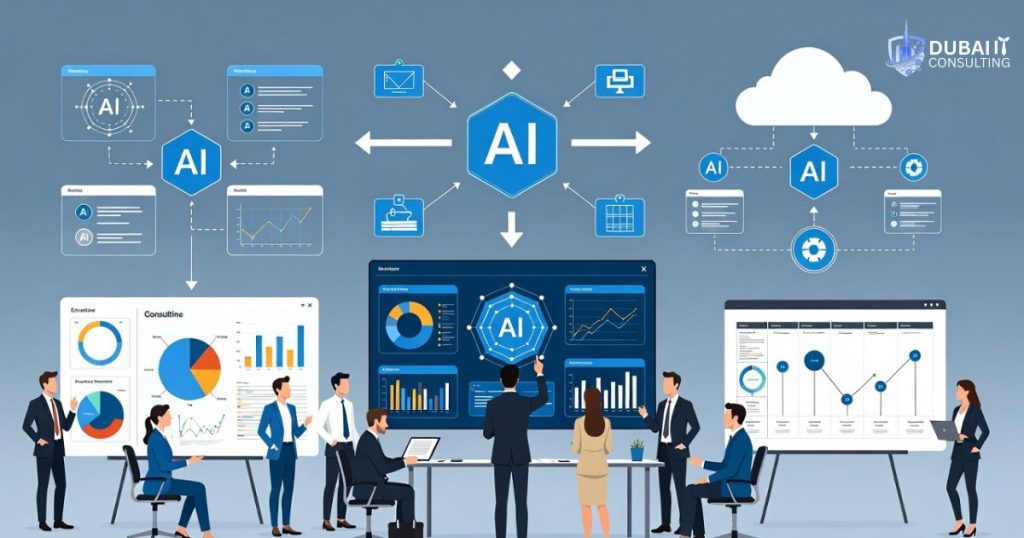
AI consulting and strategic integration involve guiding organizations through the structured implementation, governance, and scaling of AI systems. By providing expertise in technology selection, workflow integration, and best practices, AI consulting ensures that AI initiatives align with business objectives and deliver measurable value.
Why It Matters
As one of the key trends in AI and IT consulting, strategic integration helps organizations move beyond experimental projects to adopt AI systematically. This approach reduces risks, maximizes ROI, and ensures sustainable, enterprise-wide adoption.
Real-World Application
A global enterprise partners with an AI consulting firm to develop a multi-year AI transformation roadmap, defining priorities, selecting appropriate technologies, and implementing scalable AI solutions across business units.
Human-AI Collaboration
Human-AI collaboration focuses on AI systems working alongside humans to enhance expertise and decision-making rather than replace human roles. These systems provide insights, automate routine tasks, and support complex problem-solving.
Why It Matters
This collaborative approach is a key AI trend, boosting productivity, reducing errors, and enabling faster, smarter decisions across industries. By combining human creativity with AI’s analytical capabilities, organizations can achieve higher efficiency and innovation.
Business Example
Software engineers use AI copilots to optimize code, detect bugs, and suggest improvements, allowing faster development while maintaining human oversight and creativity.
AI-Driven Sustainability
AI-driven sustainability involves using artificial intelligence to monitor, analyze, and optimize energy usage and environmental impact across operations. These systems process real-time data to identify inefficiencies, suggest improvements, and support eco-friendly decision-making.
Why It Matters
As one of the key AI industry trends, AI-driven sustainability helps organizations achieve environmental goals while improving operational efficiency and cost savings. Integrating AI into sustainability strategies enables companies to meet regulatory requirements, reduce carbon footprints, and enhance corporate responsibility.
Real-World Application
A manufacturing firm implements AI systems to track energy consumption and optimize production processes, reducing both electricity usage and carbon emissions while maintaining operational performance.
AI in Supply Chain Optimization
AI in supply chain optimization uses artificial intelligence to forecast demand, manage inventory, and streamline logistics. By analyzing historical sales data, market trends, and real-time operational metrics, AI systems help organizations make smarter decisions across procurement, warehousing, and distribution.
Why It Matters
As one of the most impactful AI advancements, this technology improves supply chain resilience, minimizes waste, reduces costs, and enhances responsiveness to market fluctuations. Businesses can anticipate demand shifts and allocate resources more efficiently.
Real-World Application
A global retailer leverages AI-driven demand forecasting to optimize stock levels and distribution across multiple warehouses, ensuring products are available where needed while reducing overstock and inventory waste.
Creative AI and the Action Figure AI Trend
Creative AI refers to artificial intelligence tools that generate innovative content such as product concepts, artwork, and 3D models. A prominent example is the action figure AI trend, where AI designs character prototypes for toys, collectibles, and merchandising, transforming how creative concepts are developed.
Why It Matters
As one of the latest trends in AI, creative AI highlights the expanding role of artificial intelligence beyond traditional enterprise applications, enabling businesses to accelerate design, enhance creativity, and bring products to market faster.
Business Example
A toy company uses AI-generated 3D modeling to design action figure prototypes, speeding up concept development and reducing the time and cost required for physical prototyping.
AI in Education and Workforce Development
AI in education and workforce development leverages artificial intelligence to create personalized learning experiences tailored to individual performance, learning pace, and skill gaps. By analyzing data from assessments, engagement patterns, and competencies, AI platforms adapt content and recommend targeted learning paths.
Why It Matters
As one of the most impactful AI trends, AI in education supports continuous skill development, enhances employee performance, and ensures long-term workforce adaptability in rapidly changing industries. Organizations can upskill teams efficiently while aligning training with business objectives.
Real-World Application
Corporate training programs use AI-powered platforms to recommend personalized learning modules for employees, enabling faster skill acquisition, improved engagement, and more effective professional development.
AI-Powered Decision Intelligence
AI-powered decision intelligence combines artificial intelligence, advanced analytics, and real-time data to support smarter business decision-making. These platforms analyze complex datasets, identify patterns, and provide actionable insights that guide strategy, resource allocation, and risk management across organizations.
Why It Matters
As a leading AI trend, decision intelligence improves strategic visibility, increases the accuracy of forecasts, and allows executives to react swiftly to evolving market conditions. By embedding AI into decision-making processes, organizations can minimize uncertainty and make well-informed, data-driven choices.
Real-World Application
Executives use AI-driven dashboards to monitor key performance indicators, assess emerging risks, and dynamically adjust business strategies, ensuring faster, data-backed decision-making.
Strategic Outlook
The combined influence of these 20 AI trends reflects a profound transformation in how global industries function. The ongoing AI advancements and latest developments in artificial intelligence are more than incremental improvements—they are redefining the structure and operations of modern enterprises.
Organizations that actively track AI industry trends, invest in scalable AI infrastructure, and adopt responsible, ethical implementation practices will emerge as leaders in the next phase of digital transformation. Artificial intelligence is no longer optional; it has become the central force driving innovation, efficiency, and the creation of intelligent, future-ready enterprises worldwide.
Blog Source – 15 AI Trends That Will Reshape Enterprises in 2026 .