

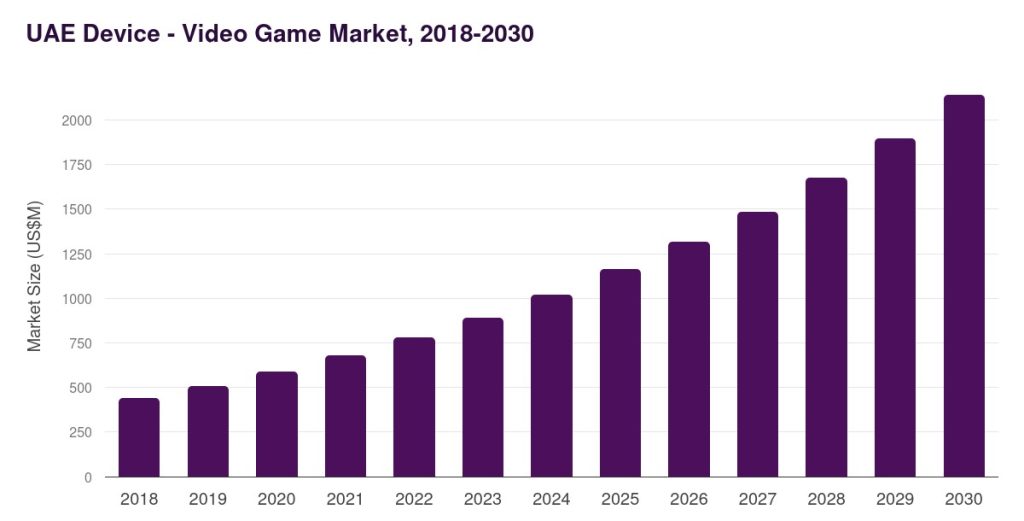
The UAE gaming market is witnessing strong and sustained growth, evolving from a niche entertainment segment into a strategic pillar of the country’s digital economy. Backed by a young, tech-savvy population, high disposable incomes, and world-class digital infrastructure, the Emirates are steadily positioning themselves as a regional hub for interactive entertainment. In 2024, the market generated an estimated AED 1.5 billion in revenue, driven by rising demand across mobile, console, PC, and emerging immersive platforms. This momentum is being further accelerated by government-led initiatives such as the Dubai Program for Gaming 2033, which aims to attract global studios, nurture local talent, and place Dubai among the world’s top gaming hubs—signaling long-term opportunities for developers, startups, enterprises, and investors alike.
As consumer spending on video games continues to outpace other forms of digital media, the UAE stands out with an average revenue per user (ARPU) of approximately AED 1,000+, the second-highest in the region. This reflects a mature, high-income market where gaming accounts for over half of total digital entertainment spending. For business owners, startups, enterprises, and investors, this boom signals lucrative opportunities across game content creation, advanced technology integration, and gaming ecosystem development.
The rise is fueled by a blend of local talent cultivation and international partnerships, making the UAE an attractive destination for game development companies in UAE. From mobile game development Dubai to sophisticated cloud gaming services in Dubai, the landscape is ripe for innovation. Enterprises seeking to capitalize on this should consider partnering with established players offering comprehensive game development services in Dubai, ensuring they stay ahead in this dynamic arena.
In this blog, we’ll explore the drivers behind this growth, emerging opportunities, the critical role of professional services, and future predictions. Whether you’re an investor eyeing the next big venture or a startup aiming to disrupt, understanding the UAE’s gaming evolution is key to unlocking potential.
Market Growth Drivers: Mobile Gaming, Cloud Gaming, Esports, and 5G
The UAE gaming industry’s rapid expansion is propelled by several interconnected drivers, each amplifying the others to create a synergistic ecosystem. High smartphone penetration, government-backed infrastructure, and cultural shifts toward digital leisure are at the core.
The Dominance of Mobile Gaming
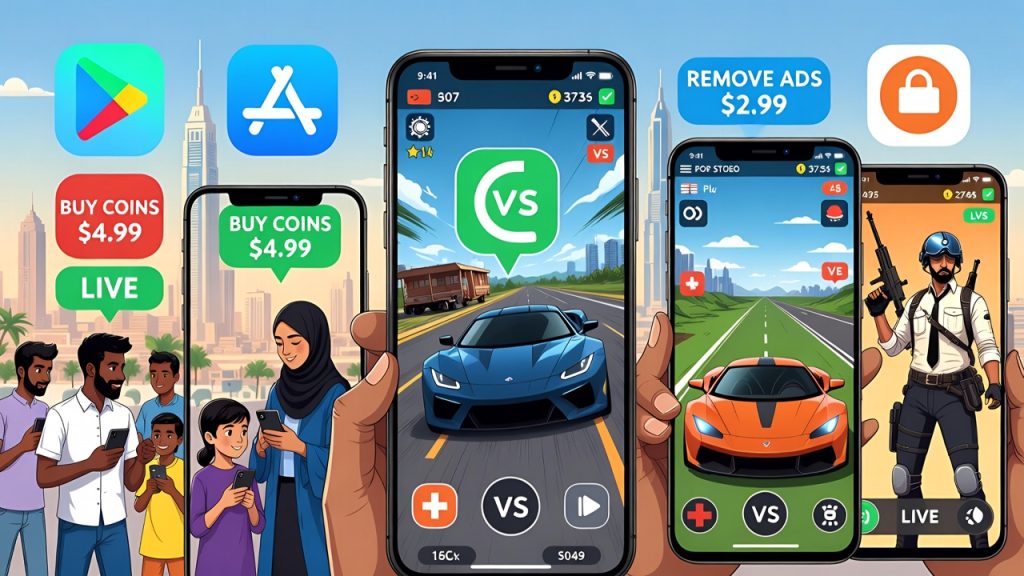
Mobile gaming leads the charge, accounting for the largest revenue share in the UAE. With smartphone penetration rates nearing 99%, nearly three-quarters of gamers engage via mobile devices. This accessibility has democratized gaming, allowing users to enjoy titles on the go without needing high-end hardware. Popular genres like action, adventure, and battle royales—think PUBG Mobile and Fortnite—dominate, with average daily playtime ranging from 20 to 40 minutes.
The surge in mobile game development Dubai is evident, as developers tailor content for Arabic-speaking audiences, incorporating cultural elements to boost engagement. Government incentives in free zones like Dubai Internet City further encourage startups to innovate, leading to localized apps that resonate regionally. As a result, mobile revenues are projected to contribute significantly to the market’s overall growth, expected to hit USD 173.6 million by 2024 in this segment alone.
Cloud Gaming’s Transformative Potential
Cloud gaming services in Dubai are revolutionizing access, eliminating barriers like expensive consoles. Powered by low-latency streaming, users can play AAA titles on any device—smartphones, TVs, or laptops. Etisalat’s Arena Pro, for instance, offers over 100 games with a free first month, leveraging cloud infrastructure for seamless experiences.
The rollout of 5G networks is a game-changer here, enabling ultra-low latency and high-definition streaming. Telecom giants like e& are bundling cloud gaming with data plans, making it affordable and widespread. This driver is poised for explosive growth, with cloud segments expected to expand at a 17.2% CAGR as device-agnostic play becomes the norm. For enterprises, this opens doors to subscription models and on-demand content, aligning with broader digital transformation strategies.

Esports: From Hobby to Economic Engine
Esports in the UAE has evolved into a professional spectacle, attracting investments and global talent. The sector is projected to contribute USD 1 billion to Dubai’s GDP by 2033, creating 30,000 jobs under the Dubai Program for Gaming 2033. Major events like the Dubai Esports and Games Festival draw over 50,000 attendees, featuring tournaments with international partnerships from Riot Games and Ubisoft.
Government backing is robust: Mubadala’s MoU with Abu Dhabi Gaming aims to build ecosystems, while a USD 40 million deal with NIP Group in 2025 bolsters infrastructure. This has positioned the UAE as a MENA hub, with esports revenue growing at 24.1% CAGR. Brands are investing in sponsorships, creating opportunities for content creators and developers.
5G Infrastructure: The Backbone of Future Gaming
The UAE’s aggressive 5G deployment, with downstream speeds up to 30.5 Gbps, supports real-time multiplayer and AR/VR integrations. Government initiatives under Vision 2025 have refarmed spectrum for enhanced capacity, reducing latency to 20ms. This infrastructure not only boosts mobile and cloud gaming but also enables edge computing for immersive experiences.
Together, these drivers are forecasting a market CAGR of 8-13%, pushing revenues toward USD 2.4 billion by 2033. Businesses must adapt to this tech-driven landscape to thrive.
Business Opportunities for Game Development Companies
The accelerating UAE gaming market presents a wealth of opportunities for game development companies in UAE, from startups to global enterprises. With revenues set to double by 2030, the ecosystem is fertile for innovation, partnerships, and market entry.
Expanding into Localized Content Creation
One key opportunity lies in developing culturally relevant games. Arabic-localized titles, incorporating regional themes, are in high demand among the 2.2 million projected users by 2030. Game development companies can leverage free zones like twofour54, offering 100% foreign ownership and tax exemptions, to establish studios focused on RPGs and mobile adventures tailored for MENA audiences.
Partnerships with global firms, such as those seen in esports, allow for co-development of localized content, boosting engagement and revenue. For instance, blockchain-integrated play-to-earn models are emerging, with the segment potentially reaching USD 8.1 billion globally by 2033.
Capitalizing on Esports and Event Integration
Esports investments create avenues for developers to build competitive titles and platforms. Hosting events like the BLAST Premier World Final requires custom game modes and spectator tools, opening contracts for game development services in Dubai. Companies can also develop training apps or VR simulations for teams, tapping into the USD 13.3 billion GDP contribution expected from esports by 2030.
Innovating in Cloud and Subscription Models
The rise of cloud gaming services in Dubai offers opportunities for developers to create device-agnostic titles. Platforms like NVIDIA GeForce NOW and Blacknut enable instant access to libraries, encouraging developers to optimize for streaming. Subscription-based gaming, projected to reach USD 676 million by 2030, allows for recurring revenue through exclusive content.
Talent and Infrastructure Development
With 30,000 new jobs anticipated, companies can invest in talent hubs. Opportunities include AR/VR parks and data centers, where developers collaborate on next-gen tech. Startups can secure funding from entities like Savvy Games Group, fostering innovation.
In summary, these opportunities position game development companies in UAE as key players in a market growing at 12% CAGR. Strategic entry now can yield long-term dominance.
Why Enterprises Need Professional Game Development Services
In the highly competitive UAE gaming market, enterprises must avoid makeshift or amateur strategies when pursuing gaming projects. Relying on professional game development services in Dubai ensures access to specialized expertise, cutting-edge tools, and flexible scalability that are essential for long-term success. These services help businesses create polished products that stand out, drive user engagement, and generate sustainable revenue in a sector where consumer expectations are continually rising.
Ensuring High-Quality, Engaging Experiences
Professional game developers employ industry-leading engines such as Unity and Unreal Engine to build immersive, high-fidelity games that captivate and retain players. In the UAE, where approximately 73% of the population participates in gaming activities, low-quality or buggy releases can lead to rapid user churn and negative reviews. These experts manage the entire development lifecycle—from initial concept ideation and prototyping to final deployment and post-launch updates—while integrating effective monetization tactics like in-app purchases, subscriptions, and ad placements. This comprehensive approach not only enhances player satisfaction but also maximizes profitability by aligning game features with market preferences.
Navigating Regulatory and Technical Complexities
The UAE’s regulatory landscape places a strong emphasis on content appropriateness, cultural sensitivity, and data privacy, making compliance a non-negotiable aspect of game development. Seasoned professionals in game development services in Dubai guide enterprises through these requirements, ensuring games meet standards set by bodies like the Telecommunications and Digital Government Regulatory Authority (TDRA). At the same time, they seamlessly incorporate advanced technologies such as 5G connectivity for faster load times and cloud infrastructure for enhanced performance. This is especially vital for companies venturing into mobile game development Dubai, where even minor technical issues—like lag or compatibility problems—can damage brand reputation and erode customer trust in a tech-savvy market.
Scaling for Market Demands
One of the standout advantages of professional services is their ability to scale operations according to project needs, starting from small-scale prototypes and expanding to full-fledged releases. For enterprises, this translates to quicker time-to-market, allowing them to capitalize on emerging trends such as metaverse integrations, augmented reality (AR) features, or cross-platform expansions. By leveraging agile methodologies and robust testing frameworks, these partners enable businesses to adapt swiftly to user feedback and market shifts, ensuring games remain relevant and competitive without overextending internal resources.
Cost Efficiency and Risk Mitigation
Outsourcing to expert providers often proves more cost-effective than building and maintaining an in-house development team, as it eliminates expenses related to hiring, training, and infrastructure. Professionals bring proven risk mitigation strategies, including rigorous quality assurance testing, performance analytics, and user behavior tracking, which help identify and resolve issues early. In a high-ARPU environment like the UAE—where gamers are willing to spend significantly on premium experiences—this approach safeguards investments and boosts return on investment (ROI) by delivering reliable, market-ready products.
Enterprises that collaborate with dependable game development companies in UAE gain a significant competitive advantage, transforming gaming initiatives from mere experiments into powerful revenue drivers that contribute to overall business growth.
Role of IT and Digital Transformation Consulting in Gaming Growth

In the rapidly evolving UAE gaming industry, IT consulting services in Dubai serve as a crucial bridge between cutting-edge technology and effective business strategies. These services help gaming companies leverage digital tools to drive expansion, improve efficiency, and stay competitive in a market projected to reach USD 2.4 billion by 2033. By providing expert guidance on tech integration, consultants enable firms to navigate challenges like regulatory compliance and technological advancements, ultimately fostering sustainable growth.
Enabling Digital Transformation Consulting for Platforms
Digital transformation consulting is key to modernizing gaming operations, allowing companies to integrate advanced technologies such as artificial intelligence (AI) for creating personalized player experiences. For instance, AI can analyze user behavior to recommend tailored content, boosting engagement and retention rates. Additionally, blockchain technology ensures secure in-game transactions and ownership of digital assets, which is increasingly important in play-to-earn models.
Consultants also focus on optimizing platforms for seamless cross-device compatibility, meaning players can switch between mobile, PC, and console without losing progress. This approach not only enhances user satisfaction but also aligns with the UAE’s high digitization rate, where over 95% smartphone penetration supports anytime, anywhere gaming. Through strategic planning, digital transformation consulting helps gaming firms adapt to trends like VR/AR integration, positioning them for long-term success in the region.
Technology Consulting for Gaming Platforms
Technology consulting for gaming platforms delves into the foundational elements that power reliable and high-performance systems. Specialists assess and enhance backend infrastructure, including servers that minimize latency for smooth gameplay. In Dubai, this often involves incorporating 5G networks, which offer speeds up to 10 times faster than 4G, enabling real-time multiplayer sessions without lag.
Such consulting ensures platforms are scalable and secure, handling surges in user traffic during popular esports events or game launches. By addressing cybersecurity threats and integrating AI-driven analytics, consultants help prevent downtime and provide insights into player preferences, allowing developers to refine their offerings.
Cloud Consulting and Infrastructure Strategy
Cloud consulting and infrastructure strategy are vital for building flexible, cost-effective gaming environments that can grow with demand. Advisors assist in designing hybrid cloud solutions that combine on-premises resources with public clouds, reducing operational costs by up to 30% while maintaining high performance. This is particularly relevant for cloud gaming services in Dubai, where robust data centers support streaming high-quality games to any device.
In the UAE, with initiatives like data localization requirements, consultants guide compliance while optimizing for low-latency delivery. They also incorporate edge computing to bring processing closer to users, enhancing experiences in mobile and VR gaming. Overall, this strategic approach ensures gaming companies can scale efficiently, handle peak loads, and innovate without infrastructure bottlenecks.
Integrating IT Consulting for Holistic Growth
Ultimately, partnering with digital transformation consulting experts empowers gaming firms to tackle industry complexities head-on. These services foster innovation by aligning technology with business goals, from adopting AI and blockchain to building resilient cloud infrastructures. In Dubai’s tech-forward ecosystem, such holistic support drives efficiency, accelerates market entry, and positions companies as leaders in the MENA region’s gaming boom.
How to Choose the Right Game Development Partner in Dubai
Selecting the right game development partner in Dubai is a pivotal decision for businesses aiming to thrive in the UAE’s explosive gaming market, which exceeded USD 1.16 billion in 2024 and is projected to reach USD 2.39 billion by 2033. With high-stakes investments in mobile, cloud, and esports, a mismatched partner can lead to delays, budget overruns, or failed launches. Instead, focus on a systematic evaluation process that aligns their expertise with your vision, ensures cultural relevance, and supports scalable growth. This guide outlines key criteria, drawing from industry best practices to help enterprises, startups, and investors make informed choices.
Assess Expertise and Portfolio
A strong portfolio is the cornerstone of credibility, offering tangible proof of a game development company’s in UAE ability to deliver results. Prioritize firms with a track record in diverse genres—such as action, RPGs, and hyper-casual games—that have achieved measurable success, including high download numbers, positive App Store ratings, and revenue milestones.
- Review Project Diversity and Outcomes: Examine case studies for mobile game development Dubai projects that mirror your needs, like AR-integrated titles or multiplayer experiences. Look for evidence of market hits, such as games with over 1 million downloads or partnerships with global publishers.
- Quality Over Quantity: Assess visual polish, gameplay mechanics, and innovation. Tools like Unity or Unreal Engine proficiency should shine through in demos.
- UAE-Specific Wins: Favor companies with local successes, as they demonstrate understanding of regional trends like esports tie-ins.
A robust portfolio not only validates skills but also reduces project risks by showcasing real-world problem-solving.
Evaluate Technical Capabilities
In Dubai’s tech-forward ecosystem, powered by 5G and cloud infrastructure, your partner must excel in cutting-edge technologies to future-proof your games. Seek game development services in Dubai that offer end-to-end solutions, from ideation and prototyping to deployment, testing, and maintenance.
- Core Tech Stack: Proficiency in engines like Unity, Unreal Engine, and Godot; cross-platform tools for iOS, Android, PC, and consoles.
- Emerging Innovations: Expertise in AR/VR for immersive experiences, AI for dynamic NPCs, and blockchain for play-to-earn models—critical for cloud gaming services in Dubai.
- Scalability and Performance: Ability to integrate low-latency 5G features, edge computing, and robust backend servers to handle millions of users.
Verify through technical audits or pilot projects to ensure seamless integration with your existing systems.
Check for Cultural and Market Fit
The UAE’s gaming audience—young, affluent, and diverse—demands content that resonates locally. A partner ignoring cultural nuances risks alienating users in a market where 73% engage in gaming.
- Localization Expertise: Arabic language support, right-to-left scripting, and region-specific themes (e.g., desert adventures or futuristic Dubai settings).
- Regulatory Compliance: Adherence to TDRA guidelines, content ratings, and data privacy laws like PDPL.
- Market Insights: Experience with MENA trends, such as mobile-first play and esports integration, backed by analytics-driven design.
Opt for firms with UAE-based teams or deep regional knowledge to create authentic, engaging experiences.
Review Client Testimonials and Scalability
Past performance predicts future success. Dive into verifiable feedback to gauge reliability and adaptability.
- Testimonials and References: Read Clutch, GoodFirms, or LinkedIn reviews; request direct client calls from similar industries.
- Case Studies: Detailed narratives on challenges overcome, timelines met, and ROI achieved.
- Scalability: Confirm team size (50+ developers for enterprise projects), agile methodologies, and capacity to ramp up during peaks like game launches.
Scalable partners ensure your project grows without bottlenecks, supporting expansions into new platforms or markets.
Consider Cost and Collaboration
While affordability matters, prioritize value in a competitive landscape where outsourcing can cut costs by 40-60% compared to in-house teams.
- Transparent Pricing: Fixed-price for prototypes, time-and-materials for iterations; avoid hidden fees.
- Communication Protocols: Daily stand-ups, tools like Slack/Jira, and timezone alignment for Dubai operations.
- Post-Launch Support: Maintenance, updates, and analytics for sustained monetization.
Foster partnerships with clear contracts and milestones for mutual success.
By following this checklist, you’ll secure a game development company in UAE that propels your venture forward. A trusted partner like SISGAIN, delivering comprehensive gaming app development services, exemplifies these qualities for seamless, high-impact execution.
Future Outlook of the UAE Gaming Industry
The UAE gaming industry is poised for transformative expansion, with expert projections indicating revenues could surpass USD 2.4 billion by 2033, driven by robust government initiatives, technological advancements, and a burgeoning esports ecosystem. As one of the leading markets in the MENA region, the UAE benefits from high smartphone penetration, strategic investments in digital infrastructure, and a young demographic where over 77% of the population engages in gaming. This forward momentum aligns with national visions like Dubai’s Program for Gaming 2033, which aims to position the emirate among the global top 10 gaming hubs. Expert forecasts emphasize key trends that will shape the sector, offering businesses and investors opportunities to capitalize on innovation while addressing emerging challenges like sustainability.
AI and VR/AR Integration
Artificial Intelligence (AI) and Virtual Reality/Augmented Reality (VR/AR) technologies are set to redefine gameplay in the UAE, enhancing personalization and immersion to attract a wider audience. AI will enable dynamic features such as adaptive difficulty levels, real-time player recommendations, and intelligent non-player characters (NPCs) that respond to user behavior, making games more engaging and replayable. For instance, AI-driven analytics can predict player preferences, boosting retention rates in mobile and cloud-based titles.
- Economic Impact of VR/AR: Investments in VR/AR, exemplified by attractions like VR Park Dubai, are expected to inject up to USD 4.1 billion into the UAE economy by 2030, contributing approximately 1% to GDP growth. This includes applications beyond entertainment, such as training simulations in education and healthcare.
- Market Projections: The UAE’s AR/VR market is forecasted to reach USD 204.2 million by 2029, growing at a CAGR of 9.67%, fueled by government strategies like the Dubai Metaverse Initiative.
- Future Innovations: Expect hyper-personalized experiences where AI integrates with VR/AR for seamless cross-reality gameplay, such as multiplayer environments that evolve based on collective user data. Startups like Pentagon Games are already securing multimillion-dollar funding to pioneer AI-enhanced Web3 platforms.
These technologies will not only elevate user experiences but also open avenues for enterprises to develop culturally tailored content, solidifying the UAE’s role in global gaming innovation.
Subscription and Cloud Dominance
Subscription models and cloud gaming are anticipated to dominate the UAE market, offering affordable, device-agnostic access that aligns with the region’s high mobile usage and 5G infrastructure. Subscription services provide unlimited access to vast game libraries, reducing barriers for casual gamers and encouraging recurring revenue through exclusive content and updates.
- Subscription Growth: Revenues from subscription-based gaming are projected to surge to USD 676 million by 2030, expanding at a CAGR of 12.5% from 2025 onward. This shift reflects consumer preferences for access over ownership, with platforms like Apple Arcade and local telecom bundles driving adoption.
- Cloud Gaming Expansion: The UAE cloud gaming segment, currently valued at around USD 160 million, is set to grow rapidly as 5G enables low-latency streaming. Regionally, cloud channels are expected to achieve a 17.2% CAGR, outpacing traditional formats by eliminating hardware costs.
- Strategic Advantages: With data centers expanding to 3.3 GW capacity by 2030, cloud infrastructure will support high-quality, on-demand gaming, potentially integrating with metaverse ecosystems for hybrid experiences.
This dominance will empower developers to focus on content innovation, while enterprises benefit from scalable models that cater to the UAE’s affluent, tech-forward consumers.
Esports as a Global Hub
Esports will cement the UAE’s status as a MENA leader, attracting international investments and talent through world-class events and infrastructure. With ambitious programs like Dubai Gaming 2033, the sector is evolving from niche competitions to a mainstream economic driver, fostering professional pathways and community engagement.
- Job Creation and GDP Boost: Initiatives are projected to create 30,000 new jobs by 2033, contributing up to USD 1 billion to Dubai’s GDP alone. Abu Dhabi’s partnerships, such as with Ninjas in Pyjamas, will establish training academies and broadcast facilities.
- Market Projections: The UAE esports market is expected to grow from USD 14.2 million in 2024 to USD 40.4 million by 2030, at a CAGR of 18.6%. Regionally, GCC esports could reach USD 67.4 million by 2033.
- Event Hosting: The UAE will host more global tournaments, building on events like the Dubai Esports Festival, drawing millions of viewers and sponsors.
This hub status will generate opportunities in content creation, event management, and tech support, positioning the UAE alongside regional powerhouses like Saudi Arabia.
Sustainability and Inclusivity
Future developments in the UAE gaming industry will prioritize sustainability and inclusivity, ensuring long-term viability while broadening participation. As the sector grows, stakeholders are focusing on eco-friendly practices and diverse representation to align with national sustainability goals and global standards.
- Sustainable Tech Adoption: Emphasis on energy-efficient data centers and green cloud infrastructure will reduce the environmental footprint, with initiatives like NEOM’s AI-powered hubs promoting low-carbon gaming. “Games for good” will incorporate themes like environmental awareness, encouraging positive social impact.
- Inclusivity Efforts: Programs aim to enhance diversity, particularly for women and underrepresented groups, through accelerators like GameForward, which supports Emirati talent. Gender equality in STEM, exemplified by leaders like H.E. Sarah Al Amiri, will inspire inclusive content and teams.
- Responsible Gaming: Regulatory bodies like the GCGRA enforce frameworks for player protection, including self-exclusion tools, to foster ethical practices.
These priorities will build a resilient industry, attracting ethical investments and ensuring gaming contributes to broader societal goals.
Overall, the UAE gaming industry will reinforce its position as a MENA leader, with a projected CAGR of 8-12% through 2033, outpacing many global markets through innovation and strategic policies. Businesses entering now can leverage this growth for sustained success.
Conclusion: Seizing the Momentum in UAE Gaming
The UAE gaming market’s acceleration offers boundless opportunities for forward-thinking businesses. As growth drivers converge, enterprises and investors stand to benefit immensely. To navigate this landscape effectively, consider exploring SISGAIN’s gaming solutions for tailored, innovative partnerships that drive success.